Solar system

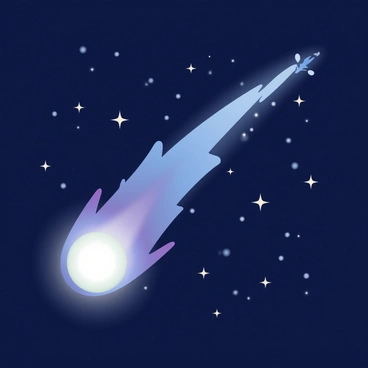
A massive solar flare is erupting from the surface of the sun, sending bright, radiant energy bursting into space. The sun's surface is depicted with vivid, fiery textures, showcasing shades of orange and yellow. The solar flare takes the form of a dynamic, swirling mass of energy, with streaks of white and gold radiating outward. In the background, the dark expanse of space contrasts sharply with the luminous flare, creating a dramatic visual impact. The flare extends outward, illuminating surrounding areas with its intense light, as particles dance along the edges of the eruption.A rocky and cratered landscape of Mercury with various sizes of craters scattered across its surface. The ground is composed of dark grey and brownish rocks, creating a rugged terrain. In the background, a blazing sun emits bright, intense light, casting stark shadows across the landscape. The sky is a deep black, contrasting sharply with the harsh brightness of the sun. The rugged features of the landscape are highlighted, emphasizing the harsh environment of the planet.A close-up view of "Jupiter," showcasing its swirling atmosphere in vibrant hues of orange, brown, and white. The planet's "Great Red Spot," a massive storm, is prominently visible, exhibiting a deep crimson color surrounded by bands of lighter shades. The atmospheric bands are dynamic, with intricate patterns and textures, reflecting the tumultuous weather. The image captures the planet's round shape and atmospheric depth, with wisps of clouds flowing across the surface, emphasizing the scale and grandeur of this gas giant.A dramatic silhouette of a solar eclipse is depicted, with the moon completely covering the sun. The sun's corona is prominently visible, glowing in radiant shapes around the silhouette of the moon. The scene is presented against the stark backdrop of a darkened sky, enhancing the contrast of the bright corona. The image captures the intricate patterns of the solar corona, with flares extending outward into the surrounding space, creating a striking visual effect.A view of "Earth" from space, displaying "vibrant blue oceans" that reflect sunlight. The surface is interspersed with "swirling white clouds" that create dynamic patterns in the atmosphere. The planet is depicted against the dark backdrop of space, emphasizing its round shape and the contrast between the colors of the oceans and clouds.A depiction of the Milky Way galaxy, showcasing a vast expanse of stars and cosmic dust in swirling patterns. In the foreground, the solar system's planets are clearly visible. The planets include a bright yellow sun at the center, with Mercury, Venus, Earth, Mars, Jupiter, Saturn, Uranus, and Neptune orbiting around it. Each planet is uniquely colored and sized, with Earth displaying blue oceans and green landmasses, and Jupiter showcasing its distinct bands of orange and white. The scene captures the grandeur of the galaxy intertwined with the planets of the solar system.A detailed diagram of the solar system. The sun is depicted at the center, radiating outward. Each planet is represented in its respective orbit around the sun. The planets vary in size and are positioned accurately according to their distances from the sun. The orbits are circular and evenly spaced, clearly indicating the pathway of each planet. Labels for each planet, including "Mercury," "Venus," "Earth," "Mars," "Jupiter," "Saturn," "Uranus," and "Neptune," are included next to their corresponding positions.A 3D render of the solar system, showcasing each planet in vivid colors. The sun is at the center, radiating bright yellow and orange hues. Closest to the sun, Mercury appears as a small, grayish-brown sphere, while Venus has a pale yellow and white surface. Earth is depicted in vibrant blue with green and brown patches representing land. Mars is shown as a reddish-orange planet. Jupiter, the largest planet, is a swirl of browns, reds, and whites, featuring its Great Red Spot. Saturn, with its iconic rings, displays shades of gold and tan. Uranus is a turquoise sphere, and Neptune is represented in deep blue. Each planet is spaced evenly, with a dark starry background enhancing their colors.A 3D icon depicting four distinct gas giants: "Jupiter" with its iconic orange and brown bands, featuring a prominent "Great Red Spot"; "Saturn" showcasing its extensive ring system in golden hues; "Uranus" presented in a light blue color with its tilted axis; and "Neptune" illustrated in deep blue with swirling clouds. Each planet is positioned with a label identifying its name, creating a clear visual comparison among the four gas giants.A dramatic meteor shower illuminating the night sky with bright streaks of light. Numerous meteors are trailing diagonally across the dark canvas filled with countless stars. The background features a deep, rich blue-black sky, creating a stark contrast against the vibrant, glowing meteors. Some meteors are wider than others, leaving long, shimmering trails that fade into the darkness. The scene conveys a sense of awe and wonder as the cosmic event unfolds.A robotic rover with metallic limbs and a camera mounted on its front is moving across the dusty surface of Mars. The rover has tracks designed for rough terrain, and its body is a mix of silver and gray hues. In the background, there are reddish hills that rise sharply against the horizon, dotted with small rocky outcrops. The sky above is a dusty orange, giving a sense of the Martian atmosphere. Dust particles are gently swirling around the rover as it moves, creating a dynamic effect of exploration on the alien landscape.A view of all the planets of the solar system lined up in a rare astronomical alignment. The planets include Mercury, Venus, Earth, Mars, Jupiter, Saturn, Uranus, and Neptune, each represented with their distinctive colors and features. Mercury appears as a small gray sphere, Venus as a yellowish, cloudy orb, Earth as a vivid blue and green globe with white cloud cover, Mars shows its reddish surface, Jupiter is a large orange and white striped planet with a prominent Great Red Spot, Saturn displays its iconic rings, Uranus is a pale blue sphere, and Neptune appears darker blue. The planets are arranged in a straight line across a starry sky, with twinkling stars scattered in the background, creating a striking cosmic tableau.A detailed illustration of "Pluto" and its moon "Charon" set in a distant, icy corner of the solar system. "Pluto" is depicted as a small, round planet with a mottled surface showing shades of light brown and gray. The planet has a thin atmosphere represented by a subtle halo around it. "Charon" is illustrated as a larger, gray, cratered moon that is in orbit around "Pluto". Surrounding them is a starry background filled with countless small white stars twinkling against the dark space. The scene captures the cold and distant nature of this remote region in the solar system.A detailed illustration of the moon’s surface featuring various craters and mountains. The craters are shown in different sizes and depths, some with shadowed interiors, highlighting their rugged textures. In the background, there are tall, jagged mountains with rocky faces, casting long shadows against the lunar ground. The surface is a mix of gray and white tones, with fine dust textures. Stars twinkle in the black sky, creating a striking contrast against the moon's surface details.A collection of rocky asteroids in space. The scene features several irregularly shaped asteroids of varying sizes, some with jagged edges and craggy surfaces. Each asteroid has a unique texture, demonstrating the roughness and detail of their rocky composition. The asteroids are set against a backdrop of deep space, with an array of stars twinkling in the distance. The asteroids are positioned at different angles, creating a sense of depth and movement within the scene.A classroom bulletin board filled with vibrant illustrations of each planet in the solar system. Each planet is depicted with distinctive colors and features; "Mercury" is small and gray, "Venus" showcases swirling yellow and white clouds, "Earth" displays blue oceans and green landmasses, "Mars" is rich in red hues with rocky textures, "Jupiter" features its famous bands of orange, brown, and the Great Red Spot, "Saturn" presents its iconic rings in shades of gold, "Uranus" is a pale blue with a smooth surface, and "Neptune" is depicted in deep blue with hints of darker spots. The background of the bulletin board is a starry night sky that enhances the planetary illustrations. Each planet is labeled with its name in bright, playful letters.The Pioneer spacecraft is depicted as a sleek, metallic object with solar panels extended on either side. It is shown traveling away from a stylized representation of the solar system, with planets in vibrant colors lining the edges. The background features a vast, starry sky filled with twinkling white stars on a deep blue canvas. The scene captures the motion of the spacecraft as it journeys into the unknown, symbolizing exploration and adventure.A bright comet with a shiny, glowing tail is streaking across the night sky. The comet has a luminous head, radiating light with a central core that appears almost white. The tail extends behind it, displaying a gradient of colors blending from blue to purple, shimmering in the darkness. Surrounding the comet are countless twinkling stars scattered across the deep navy background of the sky, adding to the overall brilliance of the celestial scene.A spherical planet, "Neptune," showing a deep blue hue across its surface. The planet is adorned with dynamic and swirling "storm systems" that create a vibrant contrast against the blue, featuring white and lighter blue tones. The storm systems exhibit intricate patterns and dramatic shapes, conveying a sense of movement. The planet is set against a dark space background, emphasizing its rich color and the complexity of its atmospheric phenomena.A colorful aurora with vibrant shades of green, pink, and purple is dancing near Jupiter's poles. The aurora forms arcs and waves across the dark sky, creating a dynamic light show. Swirling atmospheric clouds of various gray and white hues move in the background, adding depth to the scene. The immense size of Jupiter is accentuated by the visibility of its iconic bands, providing a stunning contrast to the colorful display of the aurora.A scene depicting a lunar eclipse with a large, round moon prominently displayed in the sky. The moon is partially obscured by a dark shadow, which represents Earth's shadow covering it. The visible portion of the moon has a deep reddish hue, creating a striking contrast against the darkened backdrop of space. Stars can be seen twinkling in the background, adding to the celestial atmosphere of the scene.A dense layer of "yellowish clouds" covering the planet "Venus." The clouds appear thick and swirling, creating a mesmerizing texture in the atmosphere. Beneath the clouds, glimpses of the "surface of Venus" can be seen, featuring rocky terrain with a reddish-brown hue. The contrast between the vibrant yellow clouds and the muted colors of the surface creates a striking visual effect. Soft light filters through the clouds, adding depth and dimension to the scene.The Voyager spacecraft is soaring through the outer solar system, showcasing its distinctive golden disk and long antennas. It is surrounded by a deep space environment, with numerous stars twinkling in the vast blackness of the universe. The spacecraft is illuminated by distant starlight, highlighting its metallic surface and intricate details. The background is filled with a scattering of stars, each shining brightly against the dark expanse, creating a sense of infinite depth and exploration.A colossal gas giant, "Jupiter," with vibrant bands of orange, brown, and white clouds swirling across its surface. The planet has a prominent Great Red Spot, a massive storm, visible on its surface. Surrounding Jupiter, four distinct moons can be seen: "Io," with its colorful volcanic landscape and numerous lava flows; "Europa," featuring a smooth, icy surface with subtle cracks; "Ganymede," the largest moon, displaying a mix of bright and dark regions with a rugged terrain; and "Callisto," showcasing a heavily cratered surface. The moons orbit around Jupiter, set against the vastness of space filled with distant stars.The landscape of Mars, characterized by its rocky terrain, showcases a vast expanse of red and orange dust interspersed with craggy formations. The sun is setting on the horizon, casting a “soft, bluish glow” across the surface. Wispy clouds reflect shades of blue and lavender in the sky, creating a surreal atmosphere. Shadows lengthen over the rocks, accentuating their textures and contours. The Martian ground is dotted with small pebbles and boulders, all illuminated by the ethereal light from the setting sun.A 3D icon of Uranus with its faint rings visible around the planet. The atmosphere is a cold, bluish-green color, showcasing its unique hue. The rings are thin and translucent, surrounding the planet in a delicate manner. The surface of Uranus appears smooth with a gradient of shades of blue and green.A 3D model of the solar system featuring planets suspended from strings. Each planet is distinctly colored and shaped, representing their real-life counterparts. The planets are arranged in their correct order from the sun, with labels for each one. The sun is larger and brightly colored, serving as the central focal point. The strings are thin and transparent, giving the appearance that the planets are floating in space.A futuristic spacecraft with sleek metallic surfaces and glowing blue accents is traveling through space. The spacecraft features elongated wings and a streamlined body. In the background, "Earth" is visible on one side, showcasing its blue oceans and swirling white clouds. On the opposite side, "Mars" appears with its reddish surface and rugged terrain. The vastness of space surrounds the scene, dotted with distant stars and celestial bodies.A detailed depiction of the sun, showcasing its surface texture. The sun is illustrated with "visible sunspots" scattered across its surface, featuring darker areas that contrast with the brighter regions. "Solar prominences" extend outward in arcs, resembling fiery loops of gas, adding depth and dynamism to the image. The overall composition highlights the sun's "gleaming surface," emphasizing the radiant energy it emits.A view of Saturn's iconic rings from a side perspective. The rings are detailed with varying thicknesses and shimmering textures, showcasing a range of colors including grays, whites, and hints of gold. Saturn itself is a massive gas giant with a banded surface, displaying shades of yellow and brown. The planet casts distinct shadows across the rings, creating a contrast between light and dark areas. The backdrop is filled with scattered stars, enhancing the celestial setting of the scene.
コミュニティ内で何も見つかりませんでした