Centrioles

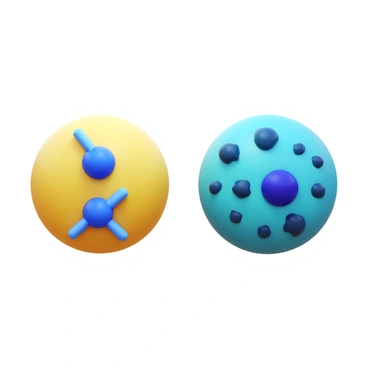
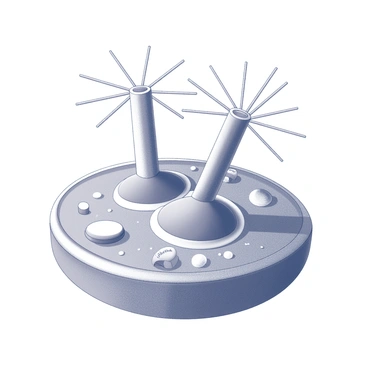
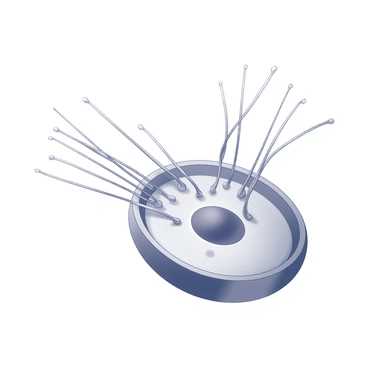
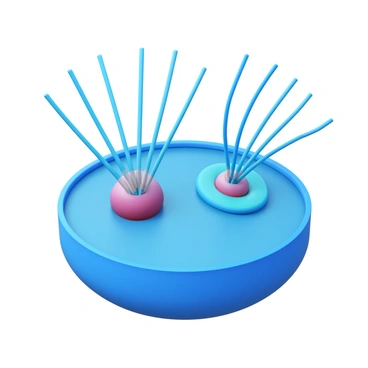
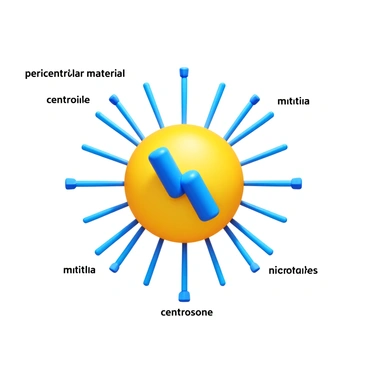
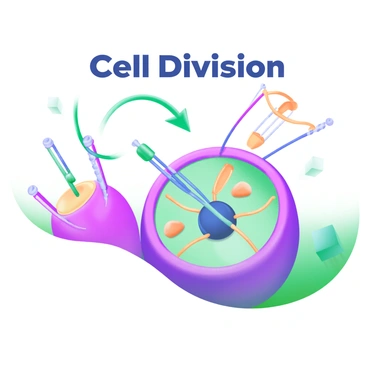
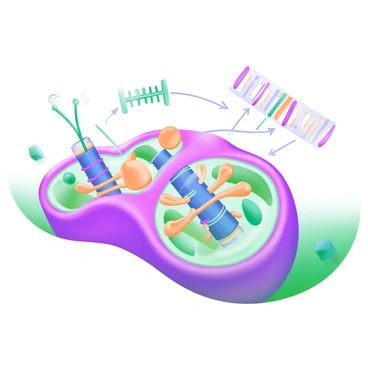
A modern pastel illustration featuring two sections side by side. On the left, an animal cell is depicted with prominent centrioles represented as small cylindrical structures near the nucleus. The animal cell contains a clearly visible nucleus, mitochondria, and a rough endoplasmic reticulum. On the right, a plant cell is illustrated without centrioles, showcasing a large central vacuole, chloroplasts, and a rigid cell wall. Both sections are labeled clearly with the words "Animal Cell" and "Plant Cell." The background is a soft gradient to enhance the contrast between the two cell types.A 3D icon of centrioles in vibrant colors. The centrioles display intricate geometric patterns, with each cylindrical structure showing distinct textures and designs. The icon emphasizes the symmetry and arrangement of the centrioles, highlighting their role in cell division. Light reflects off the surfaces, enhancing the visual depth and contrast within the colors.A researcher with short dark hair is leaning over a high-tech imaging device in a laboratory setting. The researcher is wearing a white lab coat, protective goggles, and gloves. The imaging device features a sleek, modern design with various screens displaying vibrant images of centrioles. On one screen, there are detailed visualizations of the structure of centrioles, illustrating their cylindrical shapes and arrangement. The lab is filled with scientific equipment, including microscopes, petri dishes, and various glassware. A large window in the background allows natural light to illuminate the space.A vibrant illustration of an animal cell with a round shape. The cell membrane is depicted in a semi-transparent light blue color. Inside the cell, there are various organelles including a prominent nucleus with a dark purple circular shape and a nucleolus inside it. The centrioles are illustrated as short, cylindrical structures with a yellow color, positioned near the nucleus. Other organelles such as mitochondria, endoplasmic reticulum, and Golgi apparatus are included, each with distinct colors and shapes, creating a lively and colorful representation of the cell's interior.A close-up view through a microscope showing the interior of a living cell. The cell is oval-shaped with a semi-transparent membrane. Inside, there are distinct structures, prominently featuring several centrioles arranged in pairs. These centrioles have a cylindrical shape with a series of microtubules arranged in a circular pattern. The surrounding cytoplasm is visible, filled with organelles and other cellular components, creating a busy and dynamic environment. The overall composition captures the intricate details of the cell's internal architecture.A laboratory setting with several scientists engaged in research. One scientist is positioned at a microscope, intently observing centrioles on a glass slide. The microscope has multiple eyepieces and is placed on a wooden table cluttered with lab equipment such as slides, petri dishes, and pipettes. Another scientist, wearing safety goggles and a lab coat, is taking notes in a notebook. The walls of the laboratory are lined with shelves filled with various scientific instruments and reference books, while a whiteboard displays diagrams and notes related to cellular biology.A detailed illustration of centrioles within a cell, showing their structure and functions. Two centrioles are arranged perpendicular to each other, with distinct cylindrical shapes made up of microtubules. Surrounding the centrioles are various cellular components like the nucleus, mitochondria, and endoplasmic reticulum. The background features shades of blue and green to represent the cellular environment. Labels indicate the roles of centrioles in processes such as cell division and organization of the cytoskeleton.A 3D icon showing two side-by-side cells. On the left, a healthy cell with two centrioles positioned near the nucleus, displaying normal structures and organization. The centrioles are cylindrical and are colored in light blue. On the right, a cancerous cell with multiple irregularly shaped centrioles scattered throughout the cytoplasm, exhibiting a disorganized arrangement. The cancerous cell appears larger and has a rough texture, with the nucleus being abnormal in shape and size.A close-up view of "centrioles" displaying their "cylindrical shape" and "arrangement within a cell". The centrioles are shown as two sets of tightly arranged cylindrical structures, with a detailed focus on their length and cross-section. Surrounding the centrioles, the context of the cell membrane and cytoplasm is visible, with small organelles and cellular components in the background, illustrating the dynamic environment of a cell.A dynamic scene showcasing multiple "centrioles" in various stages of activity during "cellular processes." Each centriole is a cylindrical structure, depicted in shades of green and yellow. They are positioned in a vibrant, swirling environment, interacting with "microtubules" represented as fine, elongated lines radiating from the centrioles. The background features a textured cellular membrane, and surrounding the centrioles are subtle hints of other cellular components, such as "mitochondria" and "ribosomes" in soft colors, emphasizing their role in cellular function.An informative illustration showing "centrioles" in a detailed biological diagram. The centrioles are depicted in a cross-sectional view, showcasing their structure and arrangement in a cell. Surrounding the centrioles are labeled arrows indicating their role in "cell division" and "mitosis". Include additional visual elements representing "health" and "disease research", such as icons of healthy cells and diseased cells at the sides. The overall layout is clear and educational, allowing viewers to easily understand the function of centrioles in cell biology.An educational scene featuring a cellular environment. In the center, two centrioles are positioned perpendicular to each other, composed of a cylindrical structure with nine triplet microtubules arranged in a circular pattern. Surrounding the centrioles, long thin microtubules are radiating outward, organized in a radial formation, mimicking a starburst effect. The background includes a textured representation of the cell membrane, while various organelles such as mitochondria and the Golgi apparatus are visible in the surrounding area. The image includes labels near the centrioles and microtubules, enhancing the educational aspect of the scene.An illustration of two centrioles positioned at opposite ends of a cell. The centrioles are cylindrical structures made up of microtubules. Numerous spindle fibers, resembling thin lines, extend from each centriole, connecting to the chromosomes in the center of the cell. The chromosomes are structured as X-shaped pairs, aligning along the equatorial plane. The scene captures the dynamic process of mitosis, with the spindle fibers appearing taut and organized. The background is a simple representation of a cell environment, ensuring focus on the centrioles and spindle fibers.An illustration depicting a pair of centrioles positioned near the center of a cell. Each centriole is cylindrical in shape and has a distinct pattern of microtubules arranged in a triplet structure. Emerging from the centrioles, several cilia extend outwards from the surface of the cell. The cilia are thin, hair-like structures with a uniform length, waving in a coordinated motion. The cell membrane envelops the entire structure, providing a clear definition of the cell's boundaries. The cilia are highlighted to emphasize their connection to the centrioles, visually demonstrating the relationship between these components.A 3D rendering of "centrioles" rotating in space, showcasing their intricate cylindrical structure composed of microtubules. The centrioles are displayed in vibrant colors, with distinct patterns and textures highlighting their composition. The rotation reveals the layered arrangement of the microtubules, emphasizing their symmetrical design. Surrounding the centrioles, a soft, glowing light enhances their appearance, creating a dynamic and engaging visual effect.An illustration depicting a group of "epithelial cells" featuring prominent "cilia" extending from their surfaces. The cells are arranged closely together, showcasing their diverse shapes and sizes. Within the cells, "centrioles" are visible, illustrating their critical role in cell division. Each centriole is detailed with distinct structural features. The overall composition highlights the interaction between the cilia and the centrioles, emphasizing their significance in cellular function. The background is subtle, ensuring focus remains on the cellular structures.An illustration showing the process of mitosis in a series of detailed steps. The first phase, prophase, depicts two centrosomes, each containing a pair of centrioles, positioned at opposite ends of the cell. The chromatin begins to condense into visible chromosomes. The second phase, metaphase, features the chromosomes lined up at the equatorial plane of the cell, with the centrioles visible anchoring the spindle fibers. In the third phase, anaphase, the sister chromatids are pulled apart towards the poles of the cell by the spindle apparatus, with centrioles at each pole facilitating the separation. The final phase, telophase, shows the chromosomes arriving at the poles and de-condensing, while the centrioles remain at opposite ends, preparing for the next division. Each phase is clearly labeled to indicate the function of centrioles throughout mitosis.A modern pastel illustration depicting two centrioles, resembling explorers, in a vibrant, microscopic wilderness filled with colorful, oversized cells and organelles. One centriole is wearing a tiny explorer's hat and holds a small flag, while the other carries a magnifying glass, examining a large, dewy droplet that sparkles in the light. Surrounding them are lush, green membranes and various shapes of mitochondria, creating a sense of adventure and discovery in this unique environment.A whimsical illustration showing centrioles as musicians in a cellular orchestra. The centrioles are creatively represented as small, cylindrical figures with colorful patterns, each holding a different musical instrument. One centriole is playing a violin, while another is intently focused on a small trumpet. They are positioned on a circular stage made of cell membrane material. Surrounding them are tiny, animated organelles, such as mitochondria and ribosomes, enjoying the performance. Notes are visibly floating in the air, creating a lively atmosphere in this unique cellular concert scene.A labeled diagram of the centrosome. The centrosome is represented in the center, with two centrioles depicted as cylindrical structures arranged perpendicular to each other. Surrounding the centrioles, there are radiating microtubules illustrated in a semi-transparent manner. Each component is clearly labeled, including "centriole," "pericentriolar material," and "microtubules." The structure is shown in a 3D view to emphasize depth and spatial arrangement.A modern pastel illustration depicting a series of centrioles, represented as small cylindrical structures, working together during cell division. The centrioles are shown at various stages, with some positioned at the poles of a dividing cell, while others organize microtubules. Surrounding the centrioles are vibrant lines that symbolize movement and dynamics. The background includes a stylized cell membrane, with a gentle gradient of soft colors to convey the biological environment. "Cell Division" is displayed prominently at the top in bold letters, with arrows indicating the direction of movement.An illustration showcasing "centrioles" during the process of "cell division." The centrioles are depicted as cylindrical structures, arranged perpendicular to each other, with vibrant colors highlighting their intricate patterns and composition. The surrounding environment includes a cell membrane and other cellular components, such as spindle fibers extending from the centrioles towards chromosomes. The background features a soft gradient, enhancing the visibility of the centrioles and their role in the cell division process.
コミュニティ内で何も見つかりませんでした