Metaphase 2

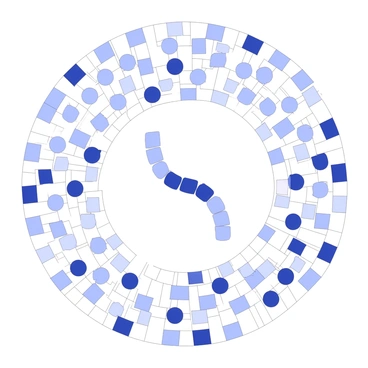
A garden scene featuring flowers arranged to resemble chromosomes in metaphase II. The flowers are vibrant, showcasing a variety of colors such as pink, yellow, and blue. Each flower is meticulously positioned to mirror the structure of sister chromatids, with delicate petals extending outward. Green foliage surrounds the flowers, providing a natural backdrop. The sunlight casts gentle shadows, highlighting the details of the petals and leaves, adding depth to the scene.A kaleidoscope design is created with intricate patterns that mimic the alignment of chromosomes in metaphase 2 during cell division. The central focal point displays a symmetrical arrangement of elongated shapes representing chromosomes, lined up in the center. Surrounding these shapes are repeating geometric patterns, mimicking the appearance of chromatid pairs. The overall composition radiates outward in a circular fashion, with each segment featuring similar yet distinct patterns, creating a sense of depth and complexity. The edges of the design are decorated with delicate filigree, enhancing the intricate nature of this visual representation.A futuristic laboratory setup featuring advanced technology. The room is filled with sleek surfaces and integrated circuits. Holographic displays project detailed images of "metaphase 2" from various angles. The displays are vibrant, showcasing chromosomes aligned at the cell's equator. Surrounding the holograms, there are various scientific instruments and equipment, highlighting a high-tech environment. The lighting is bright, emphasizing the clarity of the holographic visuals.A scientist wearing a lab coat and safety goggles is observing cell division during metaphase 2 through a high-tech microscope. The microscope features advanced optics and illuminated screens displaying cellular structures. The modern lab is filled with sleek equipment, including a centrifuge, test tubes, and a computer station with digital displays. The scientist is focused intently on the microscope, with a look of concentration on their face. Visible are chromosomes aligned at the center of the cell, shown on the computer screen. The lab has bright lighting and a clean, organized layout.A dense forest scene features tall trees arranged in a parallel formation, resembling the structure of chromosomes in metaphase II. The trees have trunks with varying shades of brown and lush green leaves, creating a vibrant canopy overhead. Sunlight filters through the leaves, casting dappled shadows on the forest floor. The ground is covered with ferns and small wildflowers, adding pops of color to the scene. In the background, a gentle slope rises, further enhancing the depth of the forest. A clear blue sky is visible through the gaps in the tree branches, providing a natural backdrop to the chromosome-like arrangement.A universe-themed scene showcasing multiple planets arranged in a linear formation, mimicking the appearance of chromosomes during metaphase 2. The planets vary in color and size, with some exhibiting rings and others having visible surface textures. A starry background adds depth to the scene, with shimmering stars scattered throughout. Bright, glowing light emanates from the planets, highlighting their shapes and textures.A metaphase 2 cell structure with musical notes arranged in place of chromosomes. The scene features a clear depiction of the cell's equatorial plane, showcasing the alignment of the musical notes in pairs. Each note is intricately designed, displaying various shapes such as quarter notes, eighth notes, and rests. The background is a soft, neutral color that accentuates the vivid colors of the musical notes, which include bright blues, greens, and yellows. The overall composition highlights the connections between the notes, symbolizing harmony in the layout.A nature scene featuring large rocks and small pebbles meticulously arranged to resemble "chromosomes" during "metaphase 2". The rocks are various shades of gray and brown, with smooth and jagged edges, while the pebbles are smaller and rounder, displaying a mix of colors including white, black, and earthy tones. The setting includes a patch of green grass surrounding the arrangement, and there are a few wildflowers nearby, adding splashes of color to the scene. Soft sunlight filters through overhead leaves, casting gentle shadows on the rocks and pebbles.A close-up view of a chromosome pair during metaphase II is displayed. The chromosomes are vividly colored with distinct bands and are aligned at the cell's equatorial plane. Each chromosome consists of two sister chromatids, joined at the centromere, which is clearly visible. The chromatids are tightly coiled, showcasing intricate patterns. The background is softly blurred to emphasize the detail of the chromosomes, drawing attention to their structural features. The overall composition highlights the complexity and organization of the chromosomes in this specific phase of cell division.A close-up view of DNA strands intertwining and condensing to form distinct chromosomes during metaphase 2. The chromosomes are visible under a microscope, showcasing their characteristic X-shape. The strands are detailed, with a vibrant color contrast, emphasizing the intricate patterns of the DNA. Surrounding the chromosomes, the cellular structures are faintly visible, providing context to the microscopic environment.A detailed representation of metaphase 2 in cell division. The image features chromosomes aligned at the cell's equatorial plate, depicted as vibrant geometric shapes. The chromosomes appear as elongated rectangles with distinct patterns, positioned parallel to each other. Soft hues like pastel pinks, blues, and purples fill the background, creating a gentle gradient. Each chromosome has a slightly different texture, adding depth to the visual. The overall composition is balanced, highlighting the arrangement of chromosomes during this stage of meiosis.A cell undergoing metaphase 2 is depicted, with a clear view of colorful chromosomes perfectly lined up in the center. The chromosomes are arranged along the metaphase plate, showcasing their distinct shapes and structures. Each chromosome is composed of two sister chromatids connected at the centromere. Around the chromosomes, the cell's membrane is visible, providing a defined boundary. The nucleus is absent, emphasizing the chromosomal alignment. Spindle fibers extend from opposite poles of the cell, attaching to the centromeres of the chromosomes.A mosaic is displayed, composed of numerous small tiles. Each tile has distinct shapes and dimensions, arranged meticulously to depict the image of chromosomes during metaphase 2. The chromosomes are aligned in the center of the mosaic, showcasing their structure with distinct sister chromatids. The overall composition of the mosaic highlights the intricate details of the chromosomes, creating a visually compelling representation of this stage in cell division.A detailed illustration of cell division during metaphase 2. The image features a cell where chromosomes are visibly aligned in the center. There are two sets of chromosomes, each distinct and neatly arranged along the metaphase plate. The cell membrane is slightly translucent, revealing the organelles inside. Microtubules extend from the centrosomes towards the chromosomes, forming a spindle structure. The background is simple, allowing the focus to remain on the cell and its components in an organized manner.An educational poster titled "Metaphase II of Meiosis" featuring clear diagrams illustrating the process. The central diagram presents chromosomes lined up along the metaphase plate, held by spindle fibers. Additional diagrams depict the cell structure, highlighting the spindle apparatus and centrioles. Bullet points list key characteristics of metaphase II, including "Chromosomes are maximally condensed", "Spindle fibers attach to kinetochores", and "Each chromosome consists of two sister chromatids". The background is a light color to enhance readability, and each diagram is labeled for clarity.A detailed microscopic view shows chromosomes aligned at the "metaphase plate" during "metaphase 2." The chromosomes are distinctly visible, with their characteristic shapes, including both chromatid arms. Each chromosome is condensed and has a bright appearance, showcasing the closely packed DNA. The background is a soft gradient, enhancing the clarity of the chromosomes and highlighting their arrangement. The spindle fibers extend from the centrosomes, reaching towards the chromosomes, emphasizing the dynamic processes occurring during cell division.A diagram depicting a timeline illustrating the stages of cell division. The timeline includes labeled sections for each stage, such as "Prophase," "Metaphase," "Anaphase," and "Telophase." Metaphase II is prominently highlighted, with distinct annotations showing chromosomes aligned at the cell's equatorial plate. Each stage features arrows indicating the progression of the process, and visual cues such as cell shapes and color variations enhance clarity and understanding.A colorful illustration depicting a science classroom setting where children are engaged in learning about metaphase 2 of meiosis. In the center, a large, friendly cartoon cell is shown with its chromosomes lined up neatly at the equatorial plate. The chromosomes are vibrant, with alternating colors of blue, pink, and yellow. Around the cell, diverse children with different skin tones are observing eagerly. One child is pointing excitedly at a diagram of the cell, while another holds a magnifying glass. The walls of the classroom are decorated with playful educational posters, and there are colorful building blocks scattered on the floor, adding to the playful atmosphere.A simple diagram depicting the stages of cell division. The diagram includes clearly labeled stages such as "Prophase," "Metaphase," "Anaphase," and "Telophase." In the center, there is an emphasis on "Metaphase 2," showcasing aligned chromosomes at the metaphase plate. Arrows indicate the movement of chromosomes during anaphase, and the cell structure is represented with a clear outline, highlighting the nucleus and cytoplasm. Each stage is illustrated with distinct colors for clarity.A microscope slide displaying a detailed view of cells in metaphase II of meiosis. The slide features well-defined chromosomes, arranged along the equatorial plane. Each chromosome is composed of two sister chromatids, clearly visible and tightly coiled. The background of the slide is a smooth, glass-like surface, enhancing the clarity of the cellular structures. There are distinct spindle fibers emanating from the poles of the cell, connecting to the centromeres of the chromosomes. The overall image captures the intricate organization and alignment of the chromosomes during this stage of cell division.A digital schematic diagram illustrating "chromosome alignment during metaphase 2." The diagram features clearly defined chromosomes arranged in a horizontal plane, with individual chromosomes depicted as distinct structures. Each chromosome is shown in a different color to enhance visual clarity. A central spindle apparatus is illustrated, with spindle fibers extending towards the chromosomes. Labels indicate key components, including "centromere" and "spindle fibers." A soft pastel color palette is used throughout the diagram to create a modern and engaging visual representation.A modern pastel illustration featuring several bubbles of varying sizes, each representing different stages of metaphase 2. The bubbles are semi-transparent and arranged in a dynamic layout, showcasing their unique sizes and colors. Inside each bubble, there are simplified diagrams illustrating chromosome alignment and spindle fibers. The background is a soft gradient of pastel colors, enhancing the focus on the bubbles in the foreground.A vintage-style scientific chart illustrating the process of "Metaphase II" in cell division. The chart features a large central illustration of a cell during metaphase, with chromosomes lined up along the equatorial plane. Around the central image, labeled diagrams display key features such as spindle fibers attaching to the kinetochores of the chromosomes. At the top of the chart, there is a banner with the title "Metaphase II" in elegant, decorative font. The background includes subtle, faded lines and a grid pattern that evoke a classic scientific aesthetic. There are annotations in elegant script providing brief descriptions of the stages and processes involved in metaphase II.
コミュニティ内で何も見つかりませんでした