Mesosphere

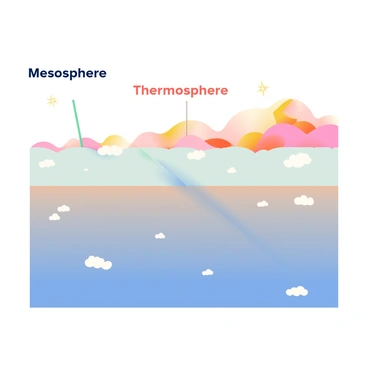
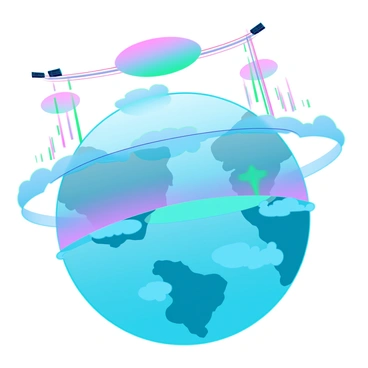
A visual representation showing the boundary between the mesosphere and the thermosphere. The image depicts two distinct layers of the atmosphere. The lower layer, representing the mesosphere, is characterized by a gradient transitioning from deep blue to lighter shades, scattered with small white clouds. The upper layer, the thermosphere, displays vibrant colors, ranging from orange to deep red, creating a fiery contrast with the cooler hues of the mesosphere. In the middle of the image, there's a clear line that defines the boundary between these two layers, labeled with the words "Mesosphere" and "Thermosphere" in a bold, modern font. Stars are faintly visible in the thermosphere, highlighting its altitude and the thinness of this atmospheric layer.A skydiver with a sleek jumpsuit and a helmet with a tinted visor is leaping from a large, colorful balloon that is floating high in the atmosphere. The balloon is vibrant, with panels of red, yellow, and blue, and it is tethered by a thick rope. Below, the curvature of the Earth is visible, with a deep blue sky stretching into the horizon. Wisps of clouds drift beneath the skydiver as they fall gracefully through the thin air of the mesosphere, their body angled down towards the Earth. The skydiver's parachute is packed tightly on their back, ready to deploy.A detailed cross-section of Earth's atmospheric layers is displayed. The image features distinct layers, including the troposphere, stratosphere, mesosphere, thermosphere, and exosphere, each labeled accordingly. The mesosphere is prominently highlighted in the middle of the diagram, showcasing its position above the stratosphere and below the thermosphere. This layer is depicted in shades of blue and purple, representing its cooler temperatures. Above and below the mesosphere, the other layers are illustrated in varying colors to denote their temperatures and characteristics. Additionally, small icons of clouds and stars are included in the troposphere and exosphere areas, respectively, emphasizing the different phenomena associated with each atmospheric layer.An illustration depicting the mesosphere and ionosphere interacting in the Earth's atmosphere. The mesosphere is represented as a layer of air with a gradient of blue hues, showcasing wispy clouds and various temperature zones. The ionosphere is illustrated above it, glowing with vibrant auroras in shades of green, purple, and pink, indicating charged particles interacting with the atmosphere. Additionally, small satellites can be seen orbiting in the background, collecting data on these atmospheric layers. A faint outline of the Earth is visible below, providing context to the atmospheric phenomena occurring above.A cross-sectional view of the mesosphere showcases its distinct layers and features. In the center, the mesosphere is illustrated as a layer of atmospheric gases, primarily focusing on the presence of various molecules like nitrogen and oxygen. The layer is depicted with a gradient effect to indicate temperature variations, showing cooler temperatures as the altitude increases. Small meteorites are shown entering the mesosphere, burning up and creating bright trails of light. Above and below this layer, the stratosphere and thermosphere are represented, highlighting the transition zones. The overall composition emphasizes the unique characteristics of the mesosphere, including its role in the atmosphere and its position within the broader context of the Earth's atmospheric layers.An illustration depicting temperature gradients from the stratosphere to the mesosphere. The image includes a vertical cross-section of the atmosphere. The stratosphere is shown at the bottom with a labeled layer, indicating increasing temperature as altitude rises. Above it, the mesosphere is clearly defined, exhibiting decreasing temperatures with altitude. Each layer is illustrated with horizontal lines representing the temperature gradient, and labeled arrows indicate the direction of temperature change. Additionally, small icons representing weather phenomena, such as clouds and stars, are scattered throughout the illustration to enhance visual interest.A sky filled with vibrant noctilucent clouds, displaying a spectrum of iridescent blues and silvers. The clouds are illuminated by the setting sun, casting warm hues of orange and pink. Below, the horizon features silhouettes of distant mountains, enhancing the depth of the scene. The overall atmosphere is tranquil, with the interplay of light showcasing the unique texture and structure of the clouds.A sleek, metallic rocket is launching into the sky, leaving a dynamic trail of thick, white smoke that billows behind it. The rocket has a streamlined design with fins and a pointed nose cone, glinting under the sunlight. It is ascending through the mesosphere, where the atmosphere transitions from blue to darker shades, peppered with a few wispy clouds. The smoke trail creates a dramatic contrast against the blue sky, swirling and dissipating as the rocket climbs higher. In the background, distant stars begin to twinkle, hinting at the vastness of space beyond.A dark night sky fills the background, with a vast expanse of deep blue and black. A multitude of bright meteors streak across the horizon, illuminating the scene with dazzling trails of light. The meteors vary in color, with some appearing in vibrant shades of green, orange, and white. Below the meteors, a silhouette of mountains can be seen, and a few scattered trees dot the landscape in shadows. The stars above twinkle in contrast to the glowing meteors, creating a sense of wonder and awe in the atmosphere.A shadow from a solar eclipse is cast across the mesosphere. The scene depicts a dark silhouette of the moon obstructing the sun, creating a dramatic contrast against the illuminated portion of the sky. The mesosphere is visible, showing layers of atmospheric gases, with wispy clouds forming intricate patterns. Light from the sun creates a radiant halo around the edges of the moon, enhancing the visual impact. The overall atmosphere is dynamic, highlighting the transition between light and darkness in the upper atmosphere.A collection of advanced scientific instruments suspended from large weather balloons high in the atmosphere. Each balloon is bright and colorful, with various instruments attached, such as sensors and data loggers, designed to collect atmospheric data. The mesosphere surrounds them, characterized by a gradient of blue to darkening shades as the altitude increases. The instruments are sleek and streamlined, reflecting a futuristic design. Soft clouds drift below, while the sunlight casts a warm glow over the scene, creating a contrast between the balloons and the sky.A gradient of pastel colors fills the sky during dusk in the mesosphere. Soft pink and lavender hues blend together, creating a serene atmosphere. Small twinkling stars appear one by one against the deepening blue sky, forming a delicate pattern. Wispy clouds float gently, illuminated by the fading light. The scene evokes a sense of tranquility and wonder as the day transitions into night.A sundog phenomenon is visible in the sky, exhibiting two bright spots flanking the sun. The atmosphere displays a range of cloud formations in the background, with delicate ice crystals scattering sunlight. Below, the curvature of the Earth can be seen transitioning into the horizon, while the mesosphere is suggested by the clean blue expanse above. The sun, partially obscured, radiates a halo effect around it, enhancing the visual impact of the sundog.A bright, glowing falling star is streaking across the night sky as it enters the mesosphere. The star has vibrant trails of orange and yellow flames trailing behind it, illuminating the dark blue atmosphere. Surrounding the star are scattered twinkling white stars, and a faint outline of clouds can be seen below. The scene captures the dynamic motion of the star with a sense of urgency and brilliance.A sky filled with delicate polar mesospheric clouds that are glowing in the twilight. The clouds are wispy and light, illuminating a range of pastel colors including soft pinks, blues, and purples. The horizon is softly lit, with a gradient transitioning from deep blue above to lighter hues near the horizon. The overall scene captures the ethereal beauty of the clouds against the backdrop of the twilight sky.A dawn is breaking over the mesosphere. The sky is filled with layers of clouds, creating a textured appearance. The atmosphere shows a gradual transition of light as the day begins to emerge. The celestial bodies are faintly visible in the distance, adding depth to the scene. The landscape below features silhouettes of mountain peaks, contributing to the overall composition.An illustration depicts atmospheric gravity waves in the mesosphere. The scene shows a vast expanse of sky, where flowing undulating waves are visible in a gradient of depth. The waves appear to rise and fall gently, creating a rhythmic pattern across the sky. Fluffy, textured clouds are situated below the waves, enhancing the sense of height and movement. The background displays subtle variations in shading, emphasizing the atmospheric layers and depth of the mesosphere. Small, scattered particles represent the thin air present in this region, adding to the complexity of the scene.A rare mesospheric storm with swirling clouds exhibiting shades of dark blue and deep purple. Bright electrical discharges arc across the sky, illuminating the atmosphere with brilliant flashes of white and blue. The storm features jagged lightning strikes that seem to burst from the clouds, creating a dynamic visual tension. Below, the landscape appears dark and shadowy, contrasting with the vivid light show above. The scene captures the chaotic energy of this atmospheric phenomenon, with a sense of movement as the clouds churn and shift.A view from the window of the International Space Station shows the mesosphere, which appears as a deep blue layer of the atmosphere surrounding the Earth. The curvature of the Earth is visible below, with patches of green land and white cloud formations scattered across the surface. The horizon glows with a gradient of colors, transitioning from dark blue to a lighter shade, indicating the presence of sunlight. Stars twinkle in the vast blackness of space above, creating a stunning contrast against the atmospheric layers. The window frame is sleek and metallic, emphasizing the advanced technology of the station.A view of the Aurora Borealis illuminating the night sky above the mesosphere. The scene captures vibrant, swirling patterns of light stretching across the sky, creating a dynamic display. Below, the dark silhouette of the mesosphere can be seen, providing a stark contrast to the glowing colors above. Stars are visible in the background, adding depth to the expansive atmosphere. The overall composition focuses on the beauty of the aurora's movement and the vastness of the sky.An astronaut is in a space suit, plummeting downwards from the mesosphere. The astronaut's helmet reflects the curvature of the Earth below. The suit is equipped with various gadgets and life-support systems, showing intricate details of its design. In the background, there is a dark void of space dotted with distant stars. Below, the atmosphere transitions from dark blue to lighter shades, indicating the descent towards the Earth. The astronaut appears to be in a dynamic pose, with arms spread wide, and a parachute is deployed above, billowing out against the rush of the atmosphere.A fireball is streaking across the mesosphere, illuminating the sky with bright colors. The surface of the fireball glows fiercely, casting a vibrant light. Behind it, a long, bright trail radiates outward, blending into a gradient of pastel colors that fade into the deep blue of the upper atmosphere. The surrounding sky is dotted with faint stars, adding to the celestial backdrop. The scene captures the dynamic motion of the fireball against the vastness of space.A night sky is visible from the mesosphere, displaying countless stars scattered across the vast expanse. The stars twinkle with varying intensities, creating a breathtaking scene. The dark, deep blue of the sky enhances the brightness of the stars, which are arranged in constellations. Below, the curvature of the Earth can be seen, resembling a gentle arc. A thin layer of atmosphere glows slightly, indicating the boundary between space and Earth. The overall composition captures the serene and expansive nature of the cosmos.A satellite is orbiting the Earth, positioned in the upper atmosphere, illustrating its passage through the mesosphere. The satellite features solar panels extending outward and has various antennas and instruments attached to its body. Below the satellite, the curvature of the Earth is visible, showcasing landmasses and cloud formations. The background displays a starry sky, emphasizing the satellite's altitude and its movement through the atmospheric layers.Several high-altitude research balloons are seen floating in the mesosphere. The balloons are large and spherical, with a smooth surface designed for high-altitude conditions. They are tethered to scientific instruments hanging below, collecting data from the atmosphere. The sky around them is vast and expansive, with a faint curvature visible, indicating their significant altitude. The scene emphasizes the isolation of the balloons in the upper atmosphere, surrounded by a feeling of openness and distance from the Earth below.A vast sky filled with cosmic dust particles is depicted as they enter the mesosphere. The particles are shown in various sizes and shapes, sparkling and twinkling against the backdrop of a dark atmosphere. Some particles appear to be trailing faint luminous streaks, illustrating their movement through the air. The mesosphere is subtly represented with a gradient texture, indicating the transition between layers of the atmosphere. The scene captures the dynamic interaction between the cosmic dust and the atmospheric elements, conveying the beauty of this natural phenomenon.A detailed visualization of radio waves in a vibrant color spectrum, showing waves in various shades of blue, green, and purple. The waves are depicted as flowing lines, curving and bouncing off a translucent layer representing the mesosphere. The mesosphere is illustrated as a wavy, semi-transparent barrier against a dark background filled with stars. The scene conveys the interaction between the radio waves and the mesosphere, with bright sparks of energy where they collide, creating a dynamic, engaging atmosphere.A research aircraft is depicted soaring through the sky at high altitude, specifically designed for the study of the mesosphere. The aircraft features a sleek, aerodynamic design with long wings and a streamlined fuselage. Various scientific instruments and sensors are mounted on the exterior, indicating its purpose for atmospheric research. The clouds are visible below, with a clear view of the stratosphere, while the sky above transitions into a deeper, darker blue. The aircraft's windows reflect sunlight, suggesting its elevation and operational state. The scene captures the essence of advanced research in atmospheric science.A group of four scientists, two men and two women, are gathered around a sleek, holographic display table in a futuristic control room. The control room is filled with large, curved screens showing graphs and data related to the mesosphere. The scientists are wearing high-tech lab coats with illuminated panels that display their names. One scientist, a woman with short, silver hair, is gesturing towards the holographic graphs, explaining the data. Another scientist, a man with dark hair and glasses, is taking notes on a digital tablet. The atmosphere is focused and intense, with various advanced technological equipment in the background, such as rotating sphere displays and dynamic light panels.A detailed illustration showing the Earth's atmospheric layers. The diagram includes the troposphere at the bottom, characterized by weather phenomena and clouds. Above it is the stratosphere, where the ozone layer is located. The mesosphere is prominently featured, showing its position above the stratosphere, with an emphasis on its role in meteoric activity and temperature variations. The image should also include the thermosphere above the mesosphere, along with text labels for each layer, clearly identifying them.
コミュニティ内で何も見つかりませんでした