Philippine

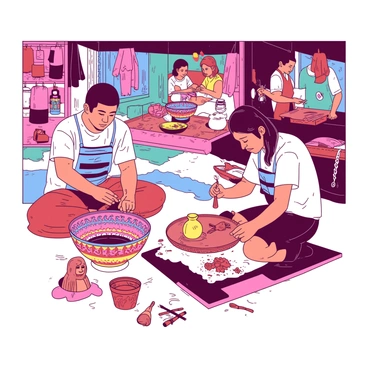
A detailed map showcasing various cultural landmarks and heritage sites across the Philippines. The map includes prominent locations such as "Intramuros" in Manila, featuring its historic walls and Spanish colonial architecture. It highlights "Rizal Park," with its lush greenery and monuments. The picturesque "Vigan" is depicted with its cobblestone streets and preserved colonial buildings. Additionally, "Banaue Rice Terraces" are illustrated, showcasing the steep, verdant slopes carved by ancient farmers. Each landmark is marked with clear labels and accompanied by small icons representing their cultural significance. The overall layout is vibrant and engaging, inviting viewers to explore the rich heritage of the Philippines.A white map of the Philippines is detailed with borders and labels, showcasing the various islands and regions. Overlaid on the map is a deep blue starry night sky filled with bright white stars scattered across the surface. The constellations are clearly depicted with connecting lines that form recognizable shapes, creating a contrast between the vibrant sky and the map underneath. The stars twinkle against the blue, enhancing the celestial theme of the image.A vibrant scene depicting artisans engaged in traditional handicrafts across the Philippines. In the foreground, a craftsman weaves a colorful basket with intricate patterns, showcasing his skilled hands and focused expression. Beside him, a woman intricately carves a wooden figure, surrounded by small tools and shavings on the ground. In the background, additional artisans can be seen working on various crafts, including pottery and textile weaving. Brightly colored fabrics hang from a nearby stall, illustrating the diverse artistry of the region. The setting is lively and filled with the essence of cultural heritage.An illustration depicting various historical sites and monuments across the Philippines. The scene showcases landmarks such as "the Rizal Monument in Manila," which features a bronze statue of José Rizal on a pedestal, surrounded by lush greenery. There is also "the San Agustin Church in Intramuros," characterized by its baroque architecture and intricate facade. "The Banaue Rice Terraces" are represented as layered fields carved into the mountains, demonstrating centuries-old farming techniques. "The Magellan's Cross in Cebu" is portrayed with its elaborately designed wooden shelter, signifying its historical importance. Each site is labeled with its name in bold lettering to emphasize their significance in Philippine history.An illustration of the Philippines featuring a group of colorful islands scattered across a bright blue ocean. Each island is uniquely shaped, showcasing lush green vegetation, sandy beaches, and vibrant coral reefs. The image includes a clear sky with fluffy white clouds. A stylized boat is shown traveling between the islands, with small waves depicted around it. A dotted line marks out a vibrant island-hopping itinerary, connecting various islands with arrows indicating direction. Each island along the itinerary is labeled with its name in bold, playful lettering.A vintage-style map of the Philippines is laid out prominently. The map features intricate illustrations of ancient landmarks such as forts, temples, and trade posts. Detailed lines represent ancient trade routes connecting various islands, with small ships depicted along the routes. The colors of the map include muted browns, greens, and blues, giving it an aged appearance. Handwritten annotations in elegant script highlight important historical sites and routes of commerce. Insets showing coastal regions and indigenous tribes adorn the edges of the map, adding depth and context to the overall design.A transparent glass bottle with a rounded base and a narrow neck is positioned upright. Inside the bottle, there is a detailed illustration of a Philippine map, showing the various islands and regions in bright colors. The map features labeled locations and landmarks, with lush green areas indicating forests and blue sections representing bodies of water. The cork stopper is placed at the top of the bottle, adding a rustic touch to the scene. The light refracts through the glass, creating subtle reflections on the surface beneath the bottle.An illustration depicting the underwater topography of the Philippine archipelago. The map features a vibrant blue ocean with varying shades indicating depth. Submarine ridges and valleys are visible, showcasing the rugged terrain of the ocean floor. Different islands are labeled with their names, surrounded by clusters of colorful coral reefs. Schools of fish swim in the foreground, contributing to the lively underwater scene. The overall composition emphasizes the intricate details of the underwater landscape, capturing the rich biodiversity of the region.A colorful illustration of the Philippine archipelago. The islands are depicted in various shades of green and blue, showcasing the lush vegetation and surrounding ocean waters. Each island is uniquely shaped, with soft curves and gentle outlines. The sky above features light pastel colors, blending seamlessly into the horizon. Small boats can be seen sailing between the islands, adding a sense of movement and life to the scene. "Philippine Archipelago" is written in a playful, flowing font across the image.A large, detailed map is displayed on a wooden table, featuring different regions each illustrated with various musical instruments that are native to those areas. In the top left corner, a bright red guitar represents South America, surrounded by lush green landmasses. To the right, a traditional African djembe drum is placed in the region of Africa, near vibrant hues of yellow and brown. In Asia, a shiny silver sitar is illustrated, nestled among shades of blue and purple. Europe is represented by a classic violin, depicted in rich, earthy tones. Each instrument is labeled with its region in elegant script, and small decorative elements such as musical notes swirl around the instruments, enhancing the theme of music across the map.A detailed map displaying various coastal areas, with vibrant illustrations of popular seafood dishes. Each coastal region is marked with a distinct symbol, showcasing a specific dish like a colorful shrimp cocktail, a steaming bowl of clam chowder, a platter of sushi, and a grilled fish. The dishes are artistically arranged around their corresponding locations, accompanied by small labels that describe each dish. The map features wavy borders to represent the ocean and includes playful waves and fish illustrations swimming around the edges.A detailed map of the Philippines is displayed, highlighting various colors to represent different regions. Prominent adventure trails are marked with dashed lines in bright orange, while hiking paths are indicated by solid green lines. Each trail is labeled with its respective name in bold black text. To the right, a compass rose is illustrated, with cardinal directions clearly indicated. Various icons representing mountain peaks, water sources, and landmarks are scattered across the map, each in distinct colors for easy identification. Small icons of hikers and backpacks are placed along popular routes to illustrate their prominence as adventure trails. The background features light, gradient colors that create a soft contrast with the map details.An illustration of the Philippines featuring vibrant green landscapes with various protected natural reserves and parks. The image showcases lush tropical forests, pristine beaches, and winding rivers. Nestled among the greenery are distinct animal and plant species native to the region, such as colorful birds and exotic flowers. Prominent landmarks like butterflies and a sunrise over a mountain range are present, highlighting the islands' natural beauty. The overall composition emphasizes the importance of conservation in this rich ecosystem.The silhouette of the Philippine archipelago prominently features its distinct islands and coastline. The background is filled with a vibrant sunset sky, showcasing a gradient of orange, pink, and purple hues. The sun is just above the horizon, casting a warm glow. The water surrounding the islands reflects the colors of the sky, creating a harmonious blend. A few scattered clouds add depth to the scene, catching the light of the sunset.A detailed black-and-white illustration of a map of the Philippines, featuring outlines of the country's major islands. Each region is marked with the name of the region written in bold letters. Surrounding the map are illustrations of iconic dishes from each region, such as a bowl of "Sinigang" placed near the region of Luzon, a "Lechon" displayed by the Visayas, and "Mindanao" represented with a serving of "Kotta". Additional dishes can be drawn alongside their respective regions, creating a visual feast that highlights the culinary diversity of the Philippines.A white map of the Philippines is filled with illustrations of various birds indigenous to the regions. Each bird is depicted in its natural colors, showcasing unique features such as vibrant feathers and distinct shapes. The map highlights different regions, with small icons representing the habitats of each bird. These birds include a bright yellow Philippine Tody-Flycatcher perched on a branch, a teal Philippine Eagle soaring across a mountainous area, and a pink Blue-naped Parrot sitting amidst lush tropical foliage. The illustrations are detailed, with attention to the birds' markings and surroundings, creating a visually informative representation of the avian diversity found across the islands.A detailed Philippine map is displayed prominently in the image. The map features vibrant colors, showcasing various islands and regions with clear boundaries. Famous beaches are highlighted with small beach icons, represented in shades of yellow and orange, indicating their locations. Notable resorts are marked with small hotel icons, depicted in blue, scattered across the map. Each icon is placed accurately over the respective areas known for their scenic shorelines and luxurious accommodations. The map includes labels for major cities and landmarks, enhancing the overall clarity and context of the image.A detailed map of the Philippines is displayed prominently. The borders of the map are adorned with various traditional tribal patterns and motifs, showcasing intricate designs and colors. Each island is clearly labeled, with vibrant hues representing the diverse regions. Surrounding the map, there are decorative elements inspired by tribal art, including stylized animals and geometric shapes that enhance the cultural significance of the piece. The overall composition combines geography with rich heritage, creating a visually striking representation of the Philippines.A detailed map of the Philippines, showcasing each region uniquely represented by its native flower. Each region is colorfully illustrated with the corresponding flower, such as "Sampaguita" for the National Capital Region, "Ilang-Ilang" for the Mimaropa region, and "Waling-Waling" for the Davao region. The map includes distinct outlines for each region, with labels in bold letters indicating the name of the flower and the region. The background is a subtle gradient, enhancing the vibrant colors of the flowers and the geographic details.A black-and-white illustrated map of the Philippines, featuring exaggerated cartoon representations of indigenous animals from each island. Each island is labeled with its name in bold text, and the cartoon animals are depicted in playful poses. For example, a carabao stands prominently on Luzon, while a tarsier is shown hanging from a branch on Bohol. A dugong swims near Mindanao, and a Palawan bearcat lounges on Palawan. Various ocean waves and trees are illustrated around the islands, adding to the playful theme. “The Philippines” is written at the top in a whimsical font.A detailed map of the Philippine islands highlighting the locations of both active and dormant volcanoes. The active volcanoes are marked with bright red icons, while the dormant volcanoes are indicated with gray icons. Various shades of green represent different regions of the islands, with clear labels identifying major cities and landmarks. The ocean surrounding the islands is depicted in a light blue color, with waves illustrated along the coastline. The map includes a legend in the corner, explaining the color coding and icons used for the volcanoes.A detailed map layout featuring the skylines of major cities in the Philippines, all represented as silhouettes. The map is divided into regions, each showcasing the iconic skyline of cities such as "Manila," "Cebu," and "Davao." Each city silhouette is distinct, highlighting notable buildings and structures, creating a varied skyline profile. The map includes labeled areas indicating city names, while the background remains plain, ensuring the focus is on the city skylines.
コミュニティ内で何も見つかりませんでした