Philippines

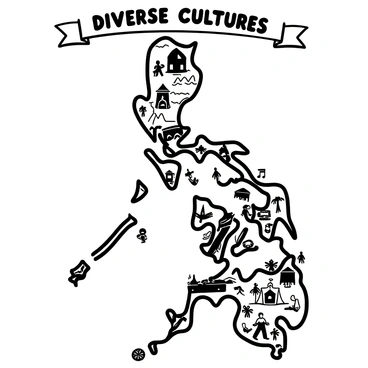
An illustrated map of the Philippines featuring distinct regions labeled with the names of the various islands. Each region is adorned with unique symbols representing different ethnic groups. Traditional houses are depicted in places reflecting the architectural styles of various cultures. Surrounding elements consist of patterns or motifs inspired by textiles and crafts from different groups. Miniature representations of traditional musical instruments can be seen scattered across the map, showcasing the rich musical heritage. There are also figures engaging in traditional dances, illustrating cultural celebrations. A banner at the top reads "Diverse Cultures of the Philippines".A lush green map of the Philippines featuring detailed topography and natural landscapes. The map prominently highlights national parks, including "Puerto Princesa", depicted with symbols representing its unique flora and fauna. "Mount Apo" is marked as the highest peak, surrounded by a rugged terrain illustration. The vibrant greens of the tropical vegetation contrast with the water bodies surrounding the islands. Each national park is labeled clearly, showcasing its significance within the country's rich biodiversity.A detailed map of the Philippines showcasing eco-tourism spots and sustainable travel options. The map features highlighted regions known for their natural beauty, including lush green forests, pristine beaches, and vibrant coral reefs. Each eco-tourism spot is marked with a symbol, such as a leaf or a tree, alongside labels in bold text. Pathways connecting these locations are depicted, with visual representations of eco-friendly transportation options, including bicycles and electric vehicles. Waterways are illustrated with shades of blue, accentuating the rich marine ecosystems. The background is filled with soft, earthy tones to enhance the focus on sustainability themes.A detailed map of the Philippines featuring distinct regions, each showcasing a popular dish. The region labeled "Luzon" displays an image of "adobo" served in a bowl, with aromatic ingredients like bay leaves and garlic accentuated. In the "Visayas" region, "sinigang" is illustrated with a vibrant mix of vegetables and tamarind broth in a pot. Surrounding these dishes, there are icons representing other regional specialties, such as "lechon" in the "Mindanao" area. The map includes colorful borders and labels for each region, capturing the essence of Filipino cuisine in a visually appealing way.A detailed map of the Philippines is presented, showcasing various islands and their geographical features. Colorful islands are illustrated in vibrant hues, with each island clearly labeled. Highlighted routes for island hopping adventures are marked with bold, contrasting lines connecting the islands, indicating popular travel paths. Small icons of boats are depicted along the routes, symbolizing the adventure. Around the edges, tropical elements like palm trees and waves add to the overall island theme.A map of the Philippines featuring an outline of the archipelago's main islands. The map includes silhouettes of prominent cities such as Manila, Cebu, and Davao, each represented by simple shapes. Iconic landmarks like the Chocolate Hills, Mayon Volcano, and the Banaue Rice Terraces are illustrated with minimalistic details in a charming style. The water surrounding the islands is represented with gentle waves, and small dotted lines indicate shipping routes.An illustrated map of the Philippines displaying various islands and regions. Each location of a heritage festival is marked with a distinct symbol, such as a small flag or an icon representing the festival's theme. The names of the festivals are written in bold, decorative text near their respective locations. The map features outlines of major geographical features like mountains, rivers, and coastlines, all in black and white. Additional elements include pathways connecting the islands, along with labels for cities and notable landmarks, contributing to the overall informative aspect of the illustration.A detailed map of the Philippines is laid out, showcasing various islands and their scenic road trip routes. The map is filled with bright colors, indicating different terrains and landmarks. Thin, winding lines in a vibrant blue represent the road trip routes, while green patches highlight lush forests and parks. Small icons depicting beautiful beaches, mountains, and famous tourist spots are scattered across the map. A legend in the corner explains the different symbols used, and there are markers with names of the islands: "Luzon," "Visayas," and "Mindanao." The overall design is both informative and visually appealing, inviting travelers to explore the scenic beauty of the islands.A detailed map of the Philippines featuring its unique island shapes. The map highlights each island's distinctive outline, arranged in an engaging layout. Various islands are labeled with their names in a decorative font. Surrounding the islands, there are small illustrations of local flora and fauna, such as tropical plants and birds. The ocean surrounding the islands is depicted with wavy lines, suggesting movement. Additionally, there are dotted lines indicating hypothetical travel routes between the islands.A detailed black-and-white illustration of a map of the Philippines highlighting various water activities. The map features outlined areas indicating popular "diving spots" with small fish icons scattered around. Specific locations are marked for "surf breaks," displaying wave symbols. Additional elements include dotted lines connecting the activities, and labeled sections for "snorkeling" and "kayaking" with respective icons. There are small illustrations of boats, coral reefs, and waves integrated into the landscape of the map. A detailed map of the Philippines is displayed, showcasing various regions known for their traditional dances. Each region is highlighted in vibrant colors, indicating its unique cultural dance heritage. At key spots on the map, dancers are illustrated in dynamic poses, wearing traditional clothing representative of their respective regions. For instance, a dancer from the Cordillera region is depicted in a colorful, woven attire, while another from the Visayas region is illustrated in a flowing, bright costume. The background includes subtle representations of notable landmarks from each region, enhancing the cultural context of the dances.A detailed illustrated map of the Philippines showcasing various islands and regions. The map prominently features "Taal Volcano" marked with a distinctive icon, highlighting its importance as a unique wildlife viewing location. Next to it, "Apo Island" is also marked, with an illustration symbolizing its rich marine biodiversity. Each island is filled with vibrant colors, and there are additional markers indicating other notable wildlife viewing spots throughout the archipelago. The surrounding ocean is depicted with waves and fish icons, enhancing the theme of nature and wildlife exploration. The map includes a decorative compass rose in one corner, adding a navigational element to the design.A detailed map of the Philippines showcasing the various festivals celebrated in different regions. The map outlines each island, with distinct markings for major cities. Small icons are placed in the corresponding regions, representing the festivals: a colorful mask for the Ati-Atihan Festival in Aklan, a rice statue for the Pahiyas Festival in Quezon, and a flower for the Panagbenga Festival in Baguio. Each icon is accompanied by the name of the festival in bold letters. The map’s borders are decorated with illustrations of traditional Filipino elements, such as festive lanterns and traditional dances, enhancing the overall theme of celebration.A detailed map of the Philippines, prominently featuring the country's major islands and provinces. Each region is illustrated using distinct indigenous art styles representative of its culture. The northern part shows traditional patterns from the Ifugao and Cordillera region, with rice terraces and woven textures. The central region highlights Visayan motifs, incorporating colorful tribal designs and sea elements like waves and boats. The southern part includes artworks from Mindanao, displaying intricate geometric patterns and symbols of the indigenous peoples. The entire map is adorned with natural elements such as tropical plants and animals, blending seamlessly with the artistic styles.A detailed map of the Philippines showcasing various islands and regions. Prominently featured are the iconic cultural landmarks "Intramuros" represented with historical architecture and "Banaue Rice Terraces" depicted with lush green terraced fields. Each landmark is labeled in an elegant font. The map includes surrounding oceans, rivers, and major cities, with a color scheme of soft pastels to enhance the visual appeal. Additionally, small icons representing local culture, such as a jeepney and a traditional Filipino house, are scattered across the map for added context.A detailed map of the Philippines featuring various islands and regions. In the foreground, there are vibrant local markets depicted on different islands. Each stall is overflowing with colorful fruits, vegetables, and traditional goods. The stalls have various awnings in bright colors, showcasing items like woven baskets, handmade crafts, and street food delicacies. Locals are depicted interacting, with some shoppers examining products while vendors enthusiastically display their wares. The overall scene captures the lively atmosphere of these markets within the context of the Philippines.A colorful map of the Philippines featuring prominent tourist attractions. The map includes "Chocolate Hills" illustrated as rolling green hills with a chocolate-like texture, scattered across the landscape. "Mayon Volcano" is depicted with a symmetrical cone shape, surrounded by lush greenery and a blue sky. Other notable attractions are marked with small icons, such as "Banaue Rice Terraces," represented by terraced fields, and "Boracay Beach," shown with golden sands and clear blue waters. Each location is labeled clearly with bold text, and the overall layout is engaging and easy to navigate.A detailed map featuring popular trekking routes in the Philippines. The map prominently displays "Mount Pulag" with its distinctive high elevation marked, showcasing trails leading to the summit surrounded by an outline of nearby areas. "Mount Apo," the highest peak in the Philippines, is illustrated with its trekking paths highlighted, indicating various entry points and routes leading to the peak. Additional trails are marked throughout the landscape, connecting these major destinations, while symbols indicate points of interest such as campsites, scenic viewpoints, and trailheads. The surrounding terrain is depicted with contour lines, showcasing the elevation changes and landscape variations encountered along the trekking routes.A picturesque map of the Philippines is displayed prominently. The map features a detailed outline of the many islands, with their names labeled in elegant font. The background is a gradient of orange and pink hues, mimicking the colors of a sunset, which frames the islands beautifully. The sea surrounding the islands has a soft shimmer, reflecting the sunset colors. Silhouettes of palm trees gently sway on the edges of the map, adding a tropical feel to the scene.A vintage-style map of the Philippines is displayed prominently. The map features intricate outlines of the islands, with warm beige and soft green tones representing the terrain. Key historical sites are marked with small icons, such as a red cross for churches and a blue star for battlefields. Each site is accompanied by elegant, cursive labels that read "Intramuros," "Rizal Monument," and "Corregidor Island." Nautical symbols adorn the edges of the map, while decorative compass rose is positioned at the top right corner. The overall appearance of the map conveys a sense of nostalgia and rich cultural heritage.An illustrated map featuring the major urban centers in the Philippines, prominently displaying "Manila" and "Cebu." The map highlights each city's skyline with detailed representations of their notable skyscrapers and landmarks. Surrounding these urban centers are stylized icons representing local culture and attractions, such as a jeepney, a traditional house, and palm trees. The map employs a pastel color palette to unify the visual theme, creating a clear and engaging layout that encourages exploration.A detailed map of the Philippines is depicted, highlighting the various islands with vibrant colors. Surrounding the coastal areas, there are stylized sun motifs radiating with rays, and gentle waves representing the sea. The landforms are outlined clearly, showing major cities and landmarks. Decorative elements, such as palm trees and marine life, are integrated into the design to enhance the tropical theme.A detailed map of the Philippines focusing on its famous beach destinations. The map highlights "Boracay" with its white sandy beaches and clear blue waters, marked with a distinct icon. "Palawan" is featured with its dramatic limestone cliffs and vibrant marine life, also represented with an eye-catching symbol. The surrounding areas include other notable beaches, with labels for "Cebu," "Siargao," and "Camiguin." The overall layout emphasizes the islands' geographical beauty, with ocean waves illustrated around the borders and small palm trees scattered across the map for added detail.A detailed black-and-white illustration of the map of the Philippines. The map includes intricate outlines of the islands with labeled regions in a clear, distinct font. Each island features varied patterns representing different landscapes, such as waves for coastal areas and lines for mountainous regions. The borders of the islands are emphasized with varying thickness, adding depth to the overall composition. Surrounding the map, there are small icons representing cultural elements like traditional houses, a jeepney, and palm trees.An underwater-themed map of the Philippines, highlighting various diving locations and rich marine life. The map features distinct regions representing different islands, with detailed illustrations of colorful coral reefs, schools of tropical fish, and unique marine species such as sea turtles and manta rays. Each diving spot is marked with icons, and arrows may lead to popular dive sites. The surrounding waters are depicted in shades of blue, with textures suggesting waves and currents, enhancing the underwater atmosphere. Labels indicating specific islands and marine parks are integrated seamlessly into the design.
コミュニティ内で何も見つかりませんでした