Identify each provided testis

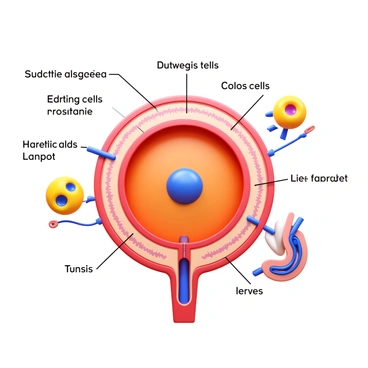
A detailed diagram illustrating the process of "sperm maturation" inside the testis. The diagram includes multiple sections showing the stages of spermatogenesis. The first section depicts spermatogonia, the initial stage of sperm development, located near the outer edge of the seminiferous tubules. The next section illustrates primary spermatocytes undergoing meiosis. Following this, secondary spermatocytes and spermatids are shown, highlighting their transformation. The final part of the diagram features mature spermatozoa, complete with flagella, ready for release into the lumen of the tubules. Each stage is labeled clearly, and arrows indicate the progression through the stages, providing a clear understanding of the maturation process.A modern pastel illustration depicting a cross-section of a testis. In the center, "Sertoli cells" are illustrated as large, supportive cells with a light beige color. Surrounding the Sertoli cells are small, "developing sperm cells" at various stages of maturation, depicted in shades of blue and green. The Sertoli cells are shown extending their arms around the developing sperm cells, providing structural support. Scattered throughout the background are detailed cellular structures, including "Leydig cells" in peach tones, and various "nuclei" illustrated in pastel colors, creating a vibrant and educational biological scene.A detailed illustration of the stages of germ cell development inside a testis. The testis is depicted in a cross-section view, showcasing the various stages of germ cells in a sequential manner. Different types of germ cells, such as spermatogonia, primary spermatocytes, secondary spermatocytes, and spermatids, are clearly labeled and represented. Each stage features distinct morphological characteristics, highlighting the process of spermatogenesis. The surrounding Sertoli cells and Leydig cells are illustrated to provide context to the environment of the germ cells. The background is a subtle representation of the testis tissue structure.A close-up view of the microanatomy of the testis is depicted. The image features the intricate structures of the testis, showing several seminiferous tubules coiled densely. Each tubule contains developing sperm cells at various stages, surrounded by Sertoli cells. Leydig cells are interspersed between the tubules, featuring their distinctive shape. The connective tissue surrounding the tubules is visible, along with blood vessels weaving through the architecture. The overall composition emphasizes the complexity and organization of the cellular structures.A detailed illustration of the network of blood vessels surrounding the testis. The image shows the testis at the center, with a series of arteries and veins branching out from it. The arteries are depicted with smooth, curved lines, illustrating their pathways as they extend towards the surrounding structures. The veins, in contrast, are shown with a more intricate, web-like arrangement, emphasizing their interconnectivity. The overall composition highlights the intricate design of the vascular system in this area, showcasing various sizes of blood vessels that encircle the testis.An illustration of a protective capsule surrounding the testis. The outer layer is depicted as a smooth, green surface, while the inner layer shows fine, detailed purple textures that represent the tunica albuginea. The testis itself is visible within the capsule, exhibiting a rounded shape and a textured surface. The entire structure is presented with clear demarcations to highlight the separation between the capsule and the testis. The background is minimal to emphasize the anatomical details of the capsule.An up-close view of seminiferous tubules showcasing various stages of spermatogenesis. The tubules are lined with Sertoli cells and exhibit developing sperm cells at different maturation stages. Each stage of spermatogenesis is illustrated clearly, showing spermatogonia, primary and secondary spermatocytes, and spermatids. The surrounding connective tissue and blood vessels are visible, adding context to the microanatomy of the testis. The image captures intricate details, textures, and colors representative of biological tissues.An illustration depicting the full process of spermatogenesis from start to finish. The image shows a series of stages highlighting the transformation of germ cells into spermatozoa. Starting with a large, rounded spermatogonium, the stages progress through mitosis and meiosis, illustrating the division and differentiation of cells. Each subsequent stage features a distinct cell type: primary spermatocytes, secondary spermatocytes, and round spermatids. The final stage presents mature spermatozoa, with a streamlined shape, a defined head, and a long tail. The background includes representations of seminiferous tubules, showcasing clusters of developing cells within the testicular tissue. Each stage is labeled clearly for educational purposes.A detailed cross-section illustration of a testis displaying various tissue layers. The outer layer is the "tunica vaginalis," a thin, transparent sac. Beneath it is the "tunica albuginea," a white fibrous capsule that surrounds the testes. Within the testis, there are numerous "seminiferous tubules" where sperm production occurs, shown in a coiled arrangement. Between the tubules are "Leydig cells," represented as clusters of large, pale cells. Each layer is distinctly labeled for clarity, and the colors used are subtle and pastel to enhance visual appeal without overwhelming the viewer.An illustration showcasing "the protective mechanisms of the testis." This includes a cross-section view of the testis with visible layers, such as the "tunica albuginea," which provides a protective capsule. Surrounding the testis is a detailed depiction of "Leydig cells" and "Sertoli cells," illustrating their roles in protection and support. Additionally, elements like "blood vessels" and "nerves" are shown, enhancing the understanding of the testis's structure and function. Labels or annotations may accompany each component for clarity.A 3D icon of a cross-section of a testis. The image clearly displays the tunica albuginea, which is a whitish, fibrous capsule surrounding the testis. The cross-section reveals the internal structures of the testis, showcasing seminiferous tubules. The tunica albuginea appears as a distinct layer, delineating the outer boundary of the testis, emphasizing its protective role. The overall composition highlights the anatomical features in a detailed and educational manner.A detailed cross-section of a testis is displayed prominently. The cut-away view reveals the various internal structures, including the seminiferous tubules, which are tightly coiled and densely packed. Surrounding the tubules are Leydig cells, depicted clearly, indicating their role in hormone production. Blood vessels are illustrated running through the connective tissue, providing a rich network for nourishment. Labels in clear, legible text point to each of these components, such as "seminiferous tubules" and "Leydig cells," enhancing the educational aspect of the illustration. The entire composition is structured to highlight the intricate anatomy and function of the testis.A detailed diagram illustrating the hormonal feedback loop involving the testis. The diagram features various components such as the hypothalamus, pituitary gland, and testis, with arrows indicating the flow of hormones. The hypothalamus at the top releases gonadotropin-releasing hormone (GnRH), which stimulates the pituitary gland to secrete luteinizing hormone (LH) and follicle-stimulating hormone (FSH). These hormones travel to the testis, where they promote testosterone production and spermatogenesis. Feedback arrows demonstrate how elevated testosterone levels signal the hypothalamus and pituitary gland to reduce GnRH, LH, and FSH secretion. The diagram is labeled clearly with each hormone and organ, providing a visual representation of the regulatory mechanism in the male reproductive system.A diagram depicting Leydig cells in a cross-section of a testis. Leydig cells are illustrated in a well-defined area, surrounded by seminiferous tubules. The Leydig cells are shown as larger, polygonal structures. Arrows lead from the Leydig cells to a representation of hormones such as testosterone, emphasizing their role in hormone production. The surrounding seminiferous tubules contain smaller germ cells at various stages of development. Labels identify Leydig cells and testosterone in a clear, readable font. The overall layout is organized and informative, providing a clear understanding of the function of Leydig cells in the reproductive system.A cross-sectional diagram depicting the interior of a testis. The diagram includes a detailed view of key structures such as the "seminiferous tubules," which are tightly coiled tubes responsible for sperm production. Surrounding the tubules, there are "Leydig cells," which produce testosterone, and "Sertoli cells," which support and nourish developing sperm. The outer layer of the testis is represented as the "tunica albuginea," a fibrous capsule. Additionally, blood vessels and lymphatics are illustrated, providing a comprehensive understanding of the anatomy of the testis. Each structure is clearly labeled for educational purposes.An illustration depicting the anatomy of the male reproductive system, focusing on the testis. The testis is shown suspended in the scrotum, which is slightly lower in temperature than the body. Arrows indicate the blood vessels, with blue arrows representing cooler blood flow to the testis and red arrows showing the warmer blood returning to the body. There are temperature regulation features highlighted, such as the cremaster muscle, which adjusts the position of the testis. The surrounding area includes a labeled diagram of the epididymis and vas deferens for context.A detailed 3D icon illustrating how genetic material is packaged into sperm within the testis. The image shows a cross-section of the testis with seminiferous tubules visible. Inside the tubules, developing sperm cells are depicted at various stages of maturation. Each sperm cell is shown with a streamlined shape, featuring a head, midpiece, and tail. The genetic material, represented as a compacted structure within the head of the sperm, is highlighted to demonstrate its packaging. Surrounding the tubules are Leydig cells, which are depicted with a distinct shape and texture. The overall color scheme includes shades of pale pink and beige for the testis structure, with contrasting colors to emphasize the sperm cells and genetic material.A comparison illustration depicts two human testicles side by side on a neutral background. On the left, there is a healthy testis, characterized by a smooth and evenly shaped surface without any visible blemishes. This testis appears firm and well-defined. On the right, there is a testis exhibiting common abnormalities. This testis features an irregular shape with noticeable lumps and swellings on its surface. Surrounding the testicles are labels that read "Healthy Testis" and "Abnormal Testis" respectively, clearly indicating the distinction between the two.An illustration depicting the vascular supply to the testis. In the center, there is a detailed representation of the testis with its smooth surface. Surrounding the testis, arteries and veins are clearly visible. The testicular artery emerges from the abdominal aorta, branching off towards the testis. The pampiniform plexus is illustrated as a network of veins that encircle the testicular artery. The image shows the spermatic cord extending upwards, and small labels are placed near each blood vessel for clarity.A flow diagram illustrating the path of sperm from the "testis" to the "epididymis". The diagram features clear, labeled arrows indicating the direction of movement. Each component is represented with distinct boxes: a box labeled "testis" serves as the starting point. An arrow leads to a box labeled "rete testis", followed by another arrow pointing to a box labeled "efferent ducts". The flow continues to a box labeled "vas deferens" before reaching the final box labeled "epididymis". The diagram is organized, with each part visually connected in a logical progression.A detailed scientific illustration of a testis, showcasing various lobules. Each lobule is distinctly segmented and labeled, with clear outlines demonstrating their structure. The lobules contain coiled seminiferous tubules, depicted in various orientations. Surrounding the lobules, the interstitial spaces are visible, featuring Leydig cells. The overall composition emphasizes the anatomical organization, with an emphasis on clarity and precision in the anatomical details.An illustration showing the testis with a smooth surface, colored in a realistic flesh tone, connected to the epididymis, which is shaped like a coiled tube. The epididymis is depicted in a slightly darker hue, emphasizing its distinct structure. The connection between the two is illustrated with a clear anatomical pathway, showcasing the spermatic duct leading from the testis to the epididymis. Additional labels in clear text identify each component, enhancing the educational aspect of the illustration.An illustration depicting several hormones that influence testis function. The central focus is a detailed, anatomical representation of the testis. Surrounding the testis are labeled arrows pointing towards it, representing key hormones, including "testosterone," "luteinizing hormone (LH)," and "follicle-stimulating hormone (FSH)." Each hormone is depicted in a distinct color for clarity. The illustration includes diagrams of hormone pathways emphasizing their effects on the testis, promoting a clear understanding of their interactions and roles.A 3D representation of the spermatic cord, showcasing its intricate structure. The spermatic cord is depicted as a bundle of various components, including blood vessels, nerves, and connective tissues. It connects the testis, represented in a detailed manner, to the body. The testis is shown with a smooth surface, exhibiting realistic textures. The surrounding anatomy is faintly visible, providing context to the connection without overwhelming the primary focus on the spermatic cord and testis.A modern pastel illustration depicting a cross-section of testicular tissue. In the center, "seminiferous tubules" are shown in a circular formation, with distinct layers visible in their structure. Nestled between these tubules are "interstitial cells," illustrated in a lighter shade, showcasing their unique shape and texture. The overall image features a soft color palette with pastel tones, enhancing the biological details. Surrounding the primary elements are subtle hints of cellular structures, providing context to the microscopic environment.
コミュニティ内で何も見つかりませんでした